
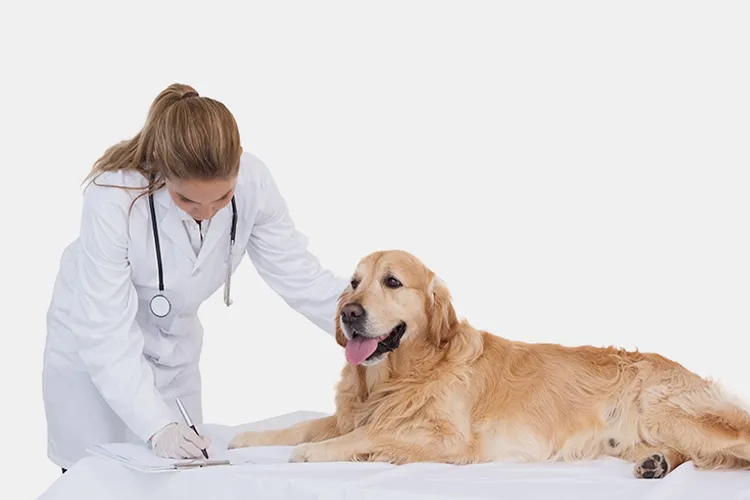
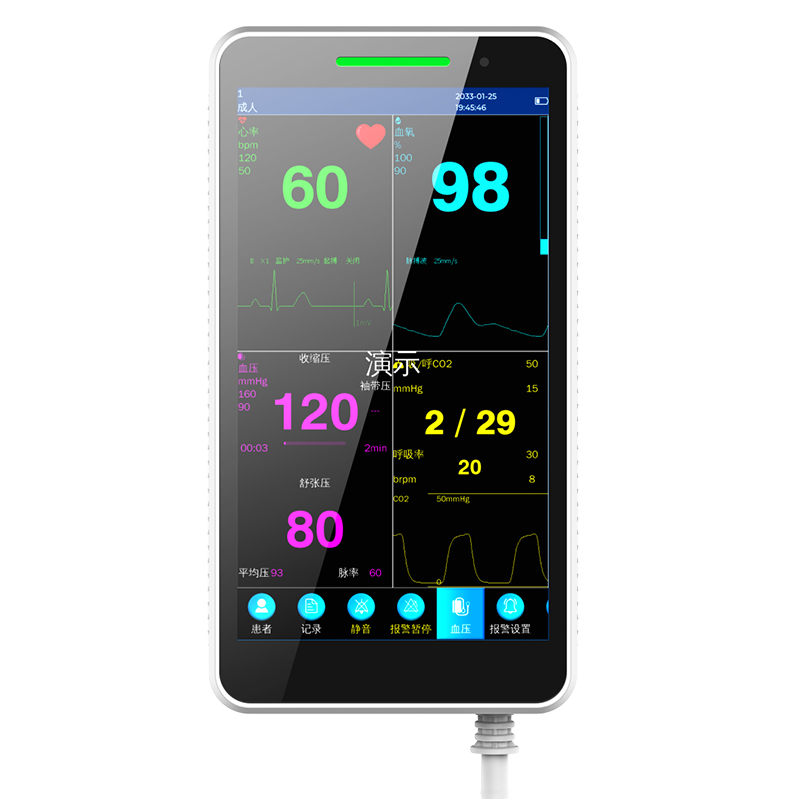
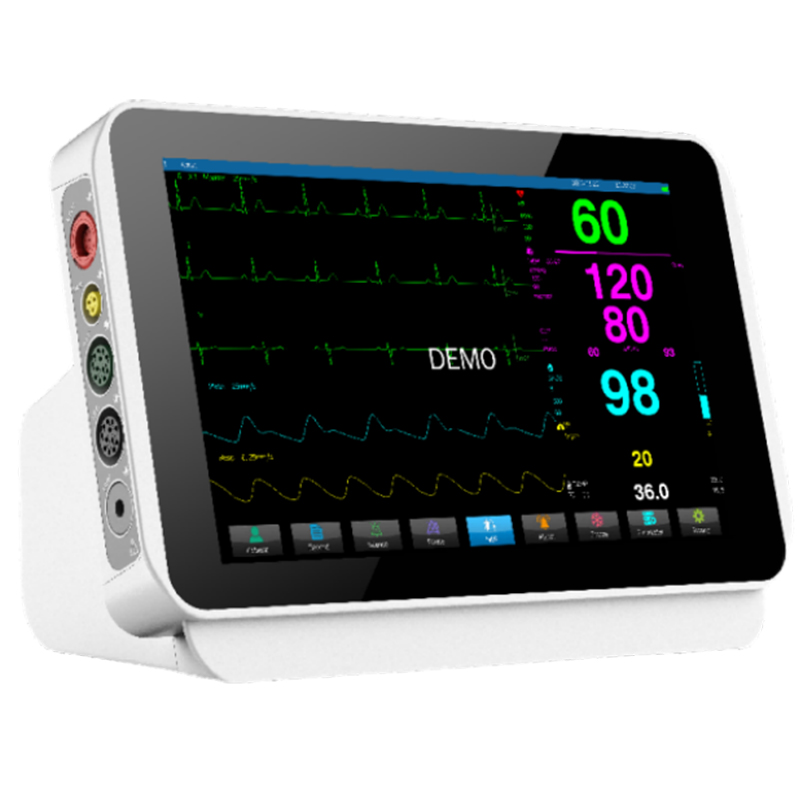
Patient Monitor/Veterinary Monitor
Model:JZWSpet H5P/JZWSpet 10S
Function:ECG+SPO2+NIBP+TEMP
Electrocardiogram (ECG) — New Core Parameter
ECG monitoring is the core upgrade in this section. It continuously captures the electrical signals of each heartbeat via electrodes attached to the body surface, presenting them as waveforms and numerical data.
What Can It Do?
Monitor Heart Rate and Rhythm: Real-time, precise display of beats per minute (heart rate) and whether the rhythm is regular.
Analyze ST Segment: Continuously observes changes in the ST segment of the ECG, crucial for early detection of myocardial ischemia (e.g., angina, myocardial infarction).
Identify Arrhythmias: Automatically analyzes and alerts for over 20-27 types of arrhythmia events, such as ventricular premature beats and atrial fibrillation, helping physicians promptly identify abnormal cardiac “circuitry” issues.
Multi-lead synchronous analysis: Supports 3- or 5-lead connections to comprehensively observe cardiac electrical activity from multiple “perspectives,” enabling more accurate problem localization.
Measurement method: Signal acquisition is performed using dedicated ECG leads and disposable electrode pads affixed to the patient's chest.
Core Parameter Overview
With ECG integration, the monitor gains a more powerful parameter suite. Below is a summary of five core parameters:
Parameter What it Monitors Clinical Value
ECG (Electrocardiogram) Cardiac electrical activity, heart rate, and rhythm Diagnosing arrhythmias, myocardial ischemia, and assessing cardiac function
NIBP (Non-Invasive Blood Pressure) Systolic, diastolic, and mean arterial pressure Evaluating circulatory status, guiding fluid resuscitation and medication
SpO₂ Arterial blood oxygen saturation Early detection of hypoxemia, guiding oxygen therapy and ventilator parameter adjustments
TEMP Surface or core body temperature Assessing infection/inflammation, monitoring temperature fluctuations
PR Pulse rate per minute Often measured concurrently with SpO₂, reflecting peripheral circulation and cardiac contraction frequency.
Patient Monitor/Veterinary Monitor
Model:JZWSpet H5P/JZWSpet 10S
Function:ECG+SPO2+NIBP+TEMP
Electrocardiogram (ECG) — New Core Parameter
ECG monitoring is the core upgrade in this section. It continuously captures the electrical signals of each heartbeat via electrodes attached to the body surface, presenting them as waveforms and numerical data.
What Can It Do?
Monitor Heart Rate and Rhythm: Real-time, precise display of beats per minute (heart rate) and whether the rhythm is regular.
Analyze ST Segment: Continuously observes changes in the ST segment of the ECG, crucial for early detection of myocardial ischemia (e.g., angina, myocardial infarction).
Identify Arrhythmias: Automatically analyzes and alerts for over 20-27 types of arrhythmia events, such as ventricular premature beats and atrial fibrillation, helping physicians promptly identify abnormal cardiac “circuitry” issues.
Multi-lead synchronous analysis: Supports 3- or 5-lead connections to comprehensively observe cardiac electrical activity from multiple “perspectives,” enabling more accurate problem localization.
Measurement method: Signal acquisition is performed using dedicated ECG leads and disposable electrode pads affixed to the patient's chest.
Core Parameter Overview
With ECG integration, the monitor gains a more powerful parameter suite. Below is a summary of five core parameters:
Parameter What it Monitors Clinical Value
ECG (Electrocardiogram) Cardiac electrical activity, heart rate, and rhythm Diagnosing arrhythmias, myocardial ischemia, and assessing cardiac function
NIBP (Non-Invasive Blood Pressure) Systolic, diastolic, and mean arterial pressure Evaluating circulatory status, guiding fluid resuscitation and medication
SpO₂ Arterial blood oxygen saturation Early detection of hypoxemia, guiding oxygen therapy and ventilator parameter adjustments
TEMP Surface or core body temperature Assessing infection/inflammation, monitoring temperature fluctuations
PR Pulse rate per minute Often measured concurrently with SpO₂, reflecting peripheral circulation and cardiac contraction frequency.


 Please leave your contact information
 en
en es
es